Civil Engineering E-Books

Build practical knowledge with easy-to-use e-books covering site work, construction, building estimation, RCC, thumb rules and more.
Designed for civil engineering students, freshers, site engineers and working professionals.

Civil Engineering E-Books for Site Work & Construction

Civil engineering students often learn concepts through textbooks and classroom theory, but applying that knowledge on an actual construction site is a different challenge. Infra Skill Hub offers practical civil engineering e-books designed to help students, freshers, site engineers and working professionals understand common engineering activities with clear and easy-to-follow references.

These e-books cover practical information engineers often need while working on site — such as what to check before and during RCC work, how to verify reinforcement and concrete-related activities, common mistakes that can affect construction quality, and the basic requirements of different construction activities. They also provide useful thumb rules and reference values for materials, quantities and day-to-day site work, helping engineers make quick checks and understand whether the work is progressing as expected.

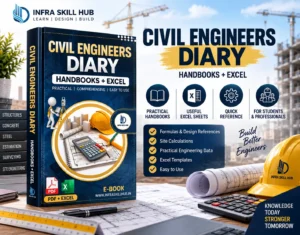
The collection includes resources such as Thumb Rule for Civil Engineers, Site Engineer Handbook, Estimation and Costing E-Book, Concrete Technology Handbook, M25 Mix Design as per IS 10262:2019, Material Test Report E-Book, Mistakes at Construction Site and Engineer’s Diary. Each resource focuses on a specific area of civil engineering that can be useful during learning, revision or practical project work.

For civil engineering students and freshers, these e-books can help bridge the gap between classroom theory and actual construction practices. For site engineers, billing engineers, contractors and working professionals, they can serve as quick references for estimation, quantities, materials, construction activities and common site-related requirements.

Whether you are preparing for your first site job, improving your construction knowledge, or looking for practical civil engineering reference material in PDF format, these e-books are created to make practical learning easier and more useful.

Frequently Asked Questions (FAQs)

What are civil engineering e-books?
Civil engineering e-books are digital guides that cover practical concepts and topics related to construction and civil engineering work. They include subjects such as site execution, estimation and costing, construction methods, thumb rules, RCC work, material testing, and common construction practices.
Who should use these civil engineering e-books?
These e-books are useful for civil engineering students, diploma holders, freshers, site engineers, billing engineers, contractors, and working professionals who want practical reference material for construction work, learning, and interviews.
Are these e-books useful for freshers and site engineers?
Yes. These e-books are especially useful for freshers and site engineers because they focus on practical site activities, construction methods, and common problems encountered during project work. They can also be used as quick references while learning or working on site.
Do these e-books help in improving practical knowledge?
Yes. The e-books focus on practical topics such as quantity checking, estimation, construction methods, material testing, RCC work, thumb rules, and common site mistakes. They help learners connect basic civil engineering concepts with their practical application on construction projects.
In which format are these e-books provided?
The e-books are provided in digital PDF format. They can be accessed on mobile phones, tablets, and laptops, making them convenient for learning, revision, and quick reference whenever required.
Can students use these e-books for learning and revision?
Yes. Civil engineering students can use these e-books to understand practical topics, revise important concepts, and prepare for internships, site work, and job interviews. They are particularly useful for learning topics that may not be covered in detail through classroom theory alone.


Explore More

Courses

For Structural Design, 3D Modelling, Site Skills...

3D Models

You Get Sketchup, D5 Render & AutoCAD Files

Excel Sheets

Bar Bending Schedule, RCC Design, Costing...

Working Templates

Download drawing templates (PDF + .dwg)

Scroll to Top